Model the operating intent
Document room behavior, schedules, scenes, local overrides, user roles, and critical dependencies. The result is a control narrative that can be checked against drawings and device selections.
Digital control is most valuable when it reveals how a space is behaving, keeps local operation dependable, and gives facility teams a practical path from observation to maintenance action.
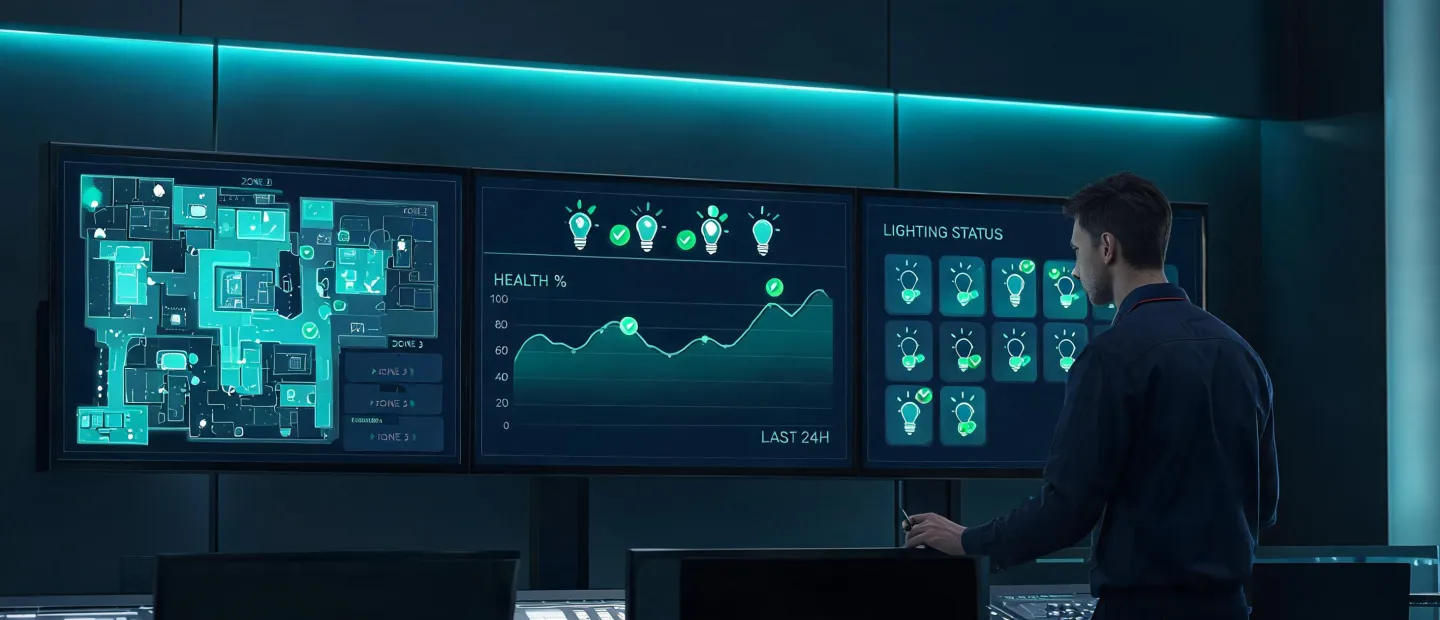
Document room behavior, schedules, scenes, local overrides, user roles, and critical dependencies. The result is a control narrative that can be checked against drawings and device selections.
Plan hubs, wireless coverage, account ownership, permissions, network coordination, and fallback operation. Connectivity becomes an engineered layer rather than a late installation task.
Review occupancy patterns, overrides, communication status, and recurring anomalies where supported by the selected platform. Trends help teams distinguish behavior changes from probable device or configuration issues.
Adjust schedules, scenes, and maintenance priorities through a governed process. Changes remain explainable because the original intent and commissioning decisions were captured.
Confirms wiring conditions, installs devices, and records field changes that affect commissioning.
Implements operating logic, validates communication, and documents the configured experience.
Reviews network policy, account practices, update responsibility, and acceptable remote access.
Owns schedules, user changes, service triage, and the operational record after turnover.
Bring your control narrative, floor plan, network constraints, and turnover expectations to a Smart Power architecture session.
Request a Smart Power Review